Seadrift I, 50 × 96”, scanned and enlarged image of sea-weathered woven plastic fisheries "big bag" remnant recovered in Hardangerfjord, Norway Print on archival paper, 2025, available
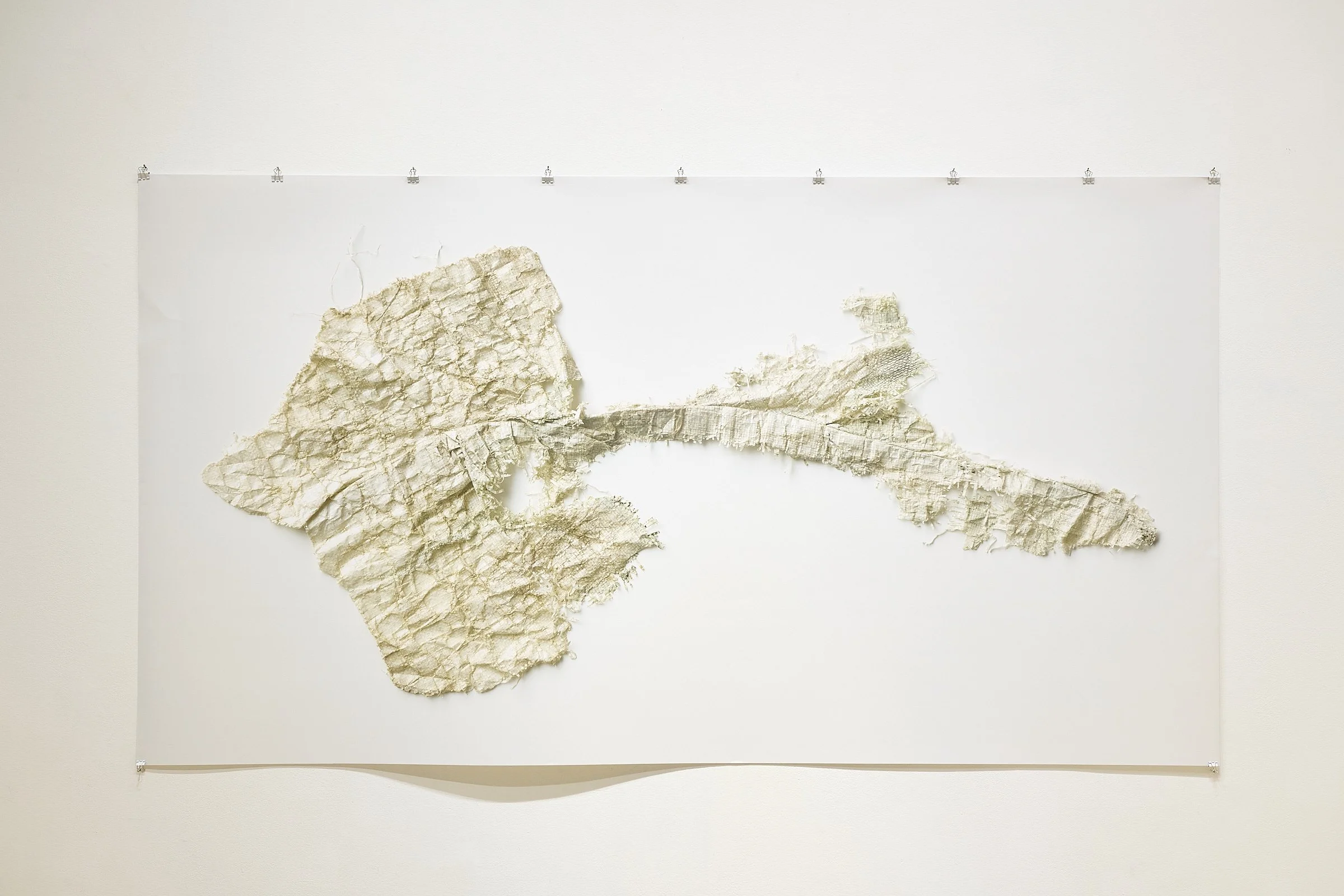
Seadrift I, 50 x 96", archival print, available
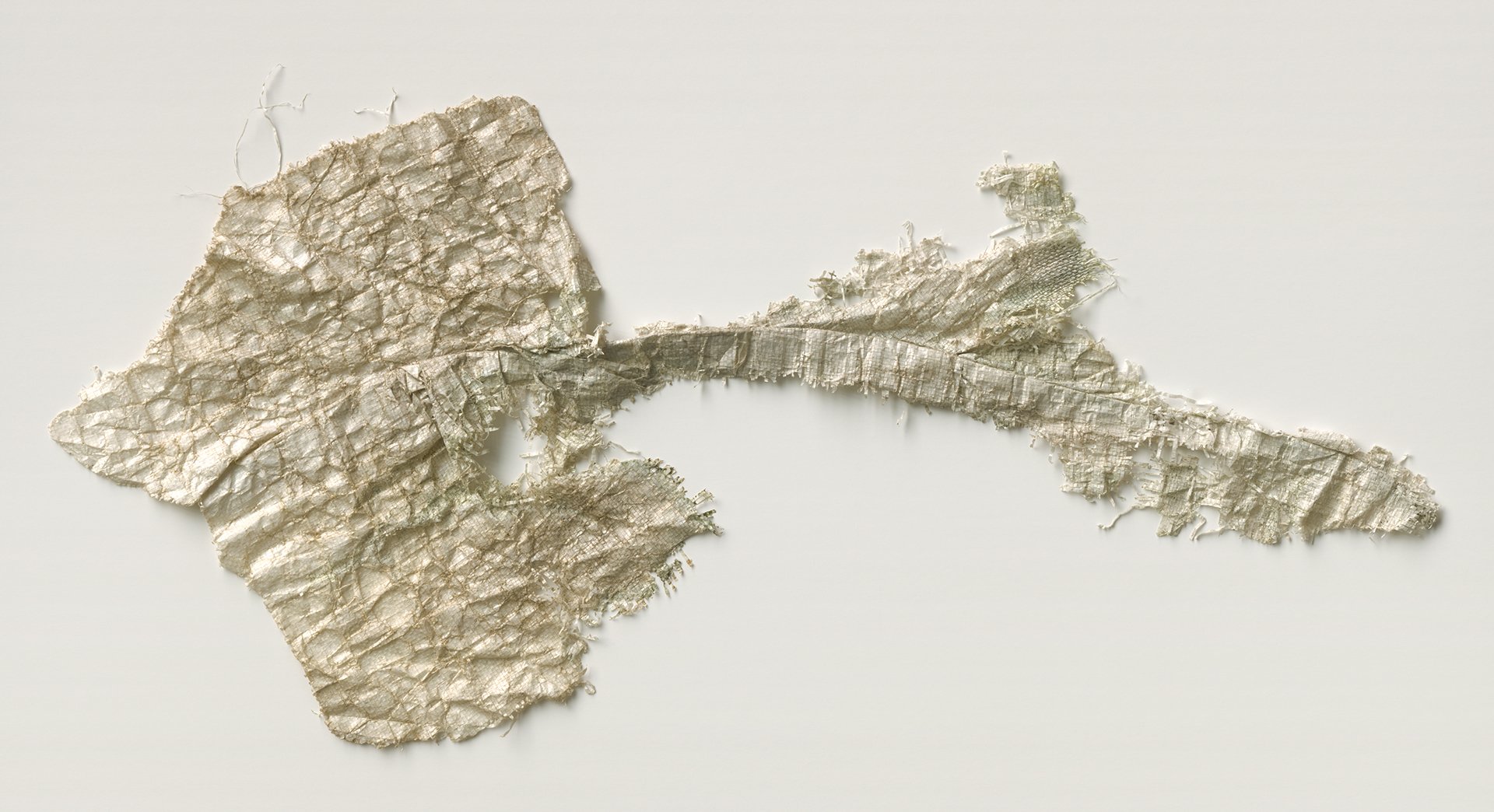
Seadrift Fragment I

Emiliania huxleyi, 41 × 37 ", cast plastifolie, 2025

Sund (Notes from the Sea), Form+Content Gallery installation, 2025
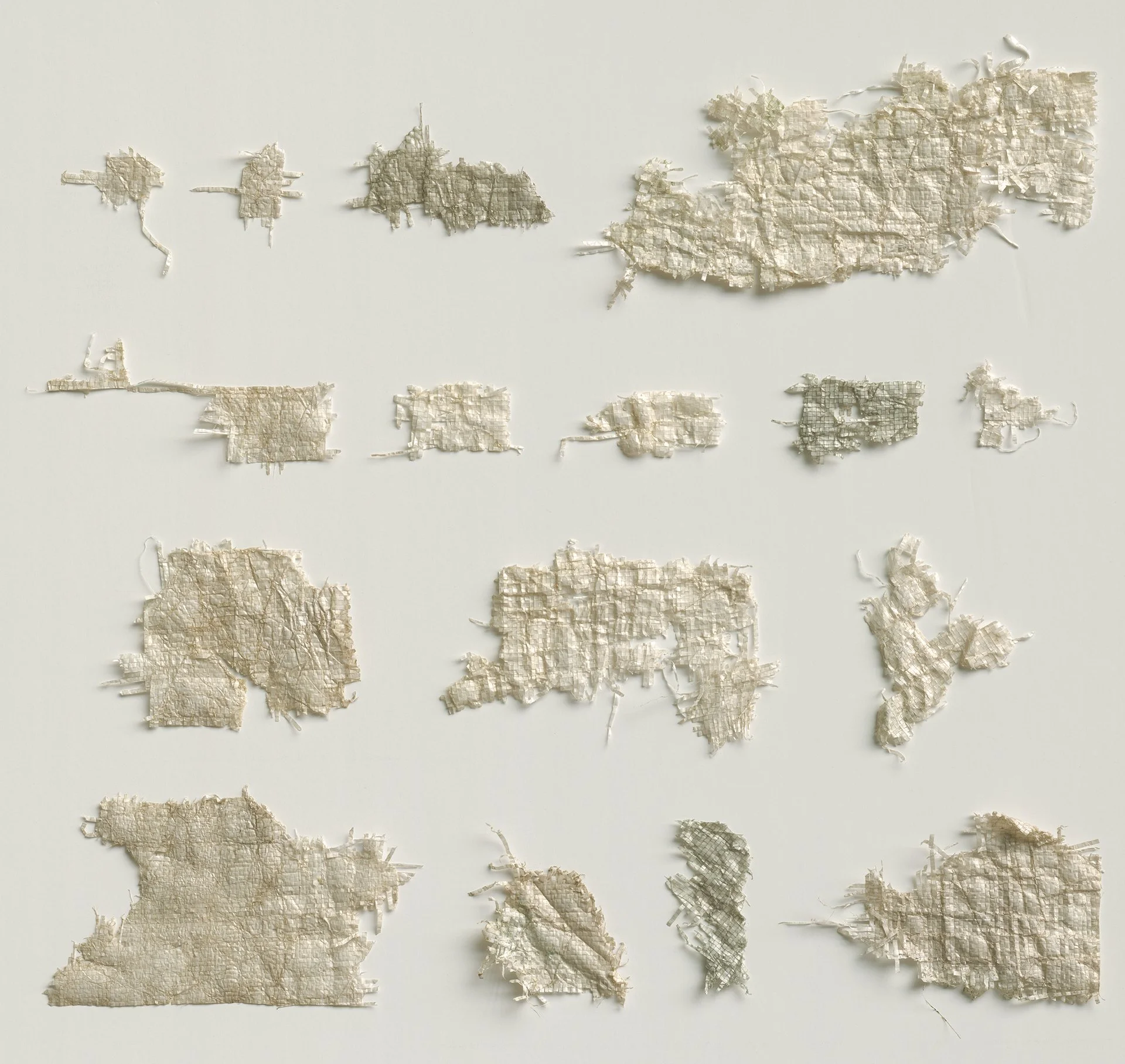
Seadrift Fragments III
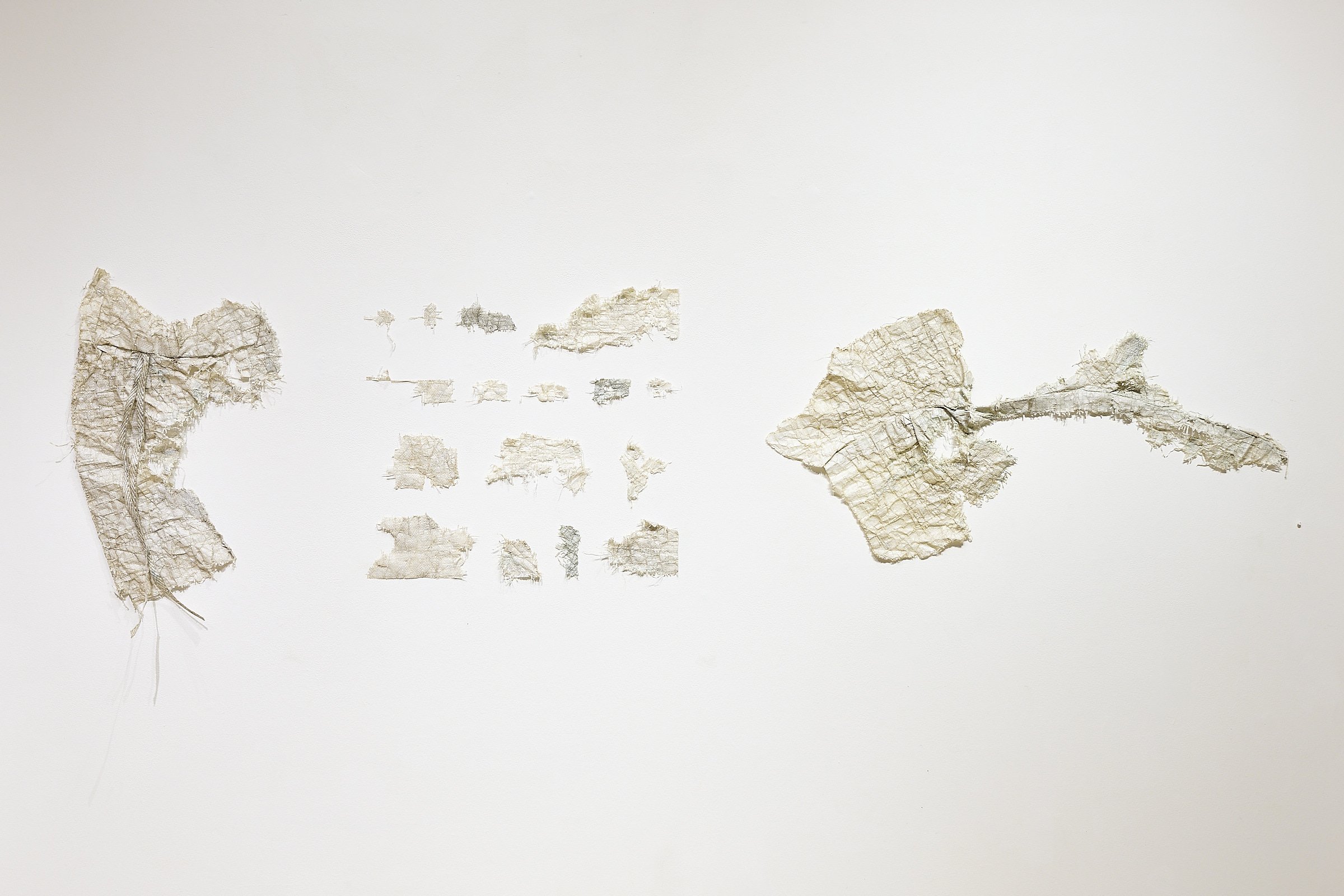
Seadrift Fragments
SEADRIFT
Sea-weathered woven plastic fisheries “big bag” remnant recovered by Bateman in Hardangerfjord, Norway near Norheimsund. White woven plastic textile fragments had been submerged, weathered and worn for a number of years in the sea.
Bateman recovered these marine plastic waste fragments during low tide, submerged and wedged into a large rock crevice near the shore of Hardangerfjord at Norheimsund while foraging kelp.
Emiliania huxleyi is the primary single-celled phytoplankton that's massive blooms turn Hardangerford into a bright blue-green color that is so intense it can be seen on satellite imagery. The blooms can occur in May and June and last for several weeks.
Emiliania huxleyi use carbon, calcium, and oxygen to produce tiny plates of calcium carbonate (coccoliths), often called "stones" by researchers. These phytoplankton remove carbon from the air, "fix" or integrate it into what is effectively limestone, and take it with them to the seafloor when they die and sink or when they are consumed (and eventually excreted) by zooplankton and fish. When large populations of Emiliania huxleyi blooms occur, the mass of sinking coccoliths can transport significant amounts of carbon to the deep sea, contributing to the ocean's carbon sink.